Soccer Hearth
The Hearth
Essay

Everything Around the Ball

What Modern Youth Soccer Has Added—and What Matters Most

New
0:00
Listen to this essay

AI-narrated audio · Written by SoccerHearth Dad
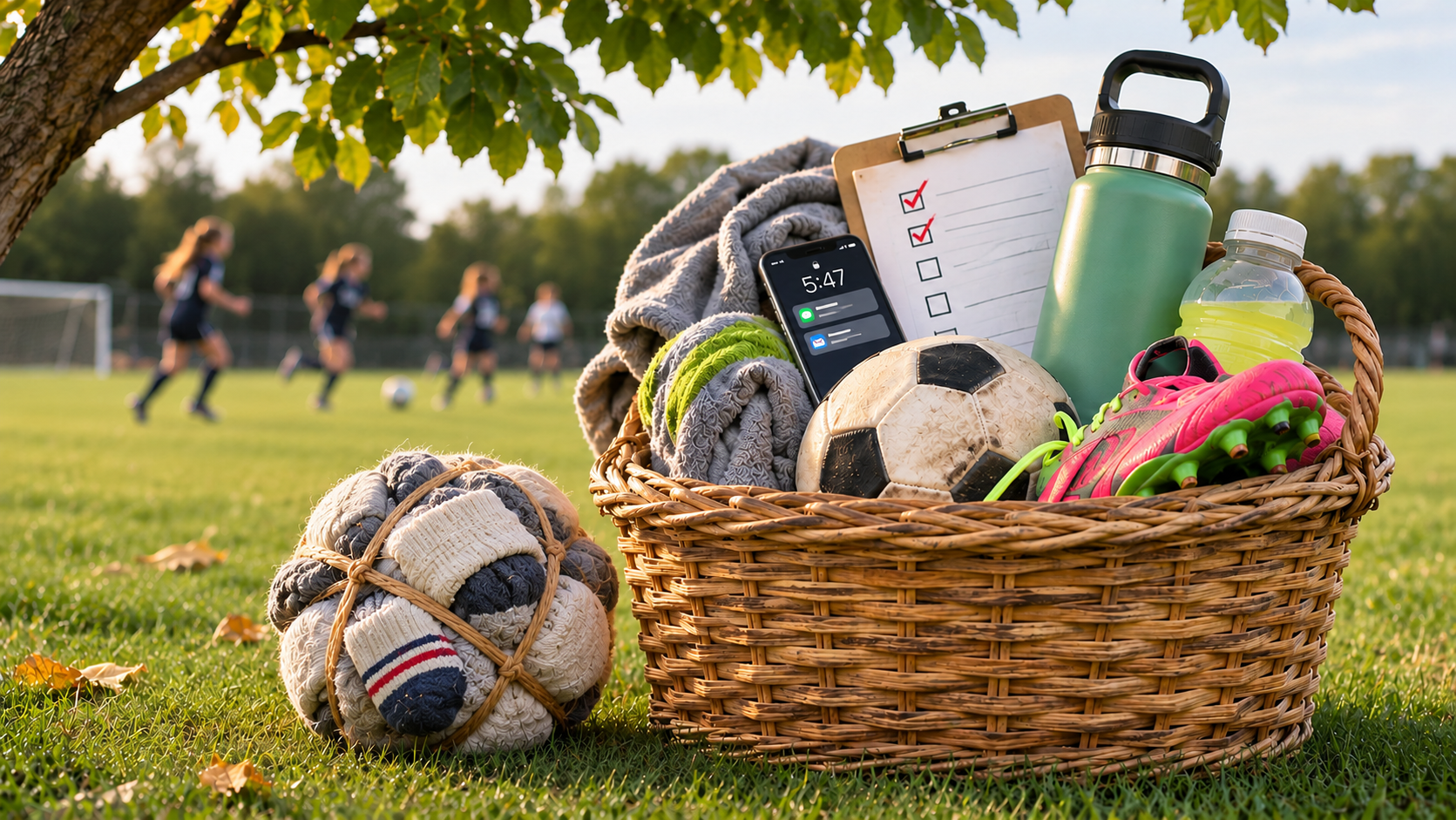
A woven basket of soccer gear beneath autumn trees, with children playing in the background.
I just spent almost an hour and a half completing waivers for my two daughters’ upcoming soccer tournament. One form took me to GotSport. Another took me to EventConnect. There were liability releases, medical authorizations, registration requirements, and accounts to access. At one point, a screen informed me there was no password associated with my account. I had apparently reached the point in modern technology where I needed a password to discover that I didn’t have a password. I exchanged text messages with a team coordinator while trying to sort everything out. She was patient and helpful. But I kept thinking about her. I had two children to worry about. She had an entire team of families to help. My hour and a half was probably only a small part of the time she spent answering questions, explaining instructions, and helping parents navigate different systems. And these were just the waivers. There was GroupMe for communication, GameChanger for game information, other club applications for schedules, and separate websites for uniforms, hotel reservations, and tournament requirements. Each one promises to make something easier. Yet the more convenient each piece becomes, the more the whole asks of parents. I began thinking about everything we have added to youth soccer over the years. Then I remembered a conversation with one of my graduate students. A Ball Made From Socks My student grew up in West Africa. He once told me that when he was a child, he and his friends sometimes made soccer balls from old socks. They played on dirt or sand, without carefully maintained grass fields, artificial turf, expensive cleats, or matching uniforms. I imagine children gathering on an open patch of ground, perhaps placing a few stones to mark the goals, and chasing a ball they had made themselves. The ball probably didn’t bounce quite like the ones we buy today. I imagine there were arguments over whether it crossed the imaginary goal line. But they played. Now walk into a sporting goods store like Scheels. There are shelves of soccer balls for different ages and playing surfaces. Walls of cleats in every imaginable color. Jerseys from famous clubs. Premium shoes associated with players such as Lamine Yamal, with some models costing hundreds of dollars. There are training jerseys, game jerseys, alternate jerseys, warm-up clothes, and bags designed to carry everything. And we have beautiful artificial turf fields, indoor facilities, and opportunities to play throughout the year. These are remarkable improvements. Better equipment and safer playing environments matter. Organized soccer has also created opportunities for many children, particularly girls, that previous generations did not always have. But improving the conditions surrounding a game and improving the joy of playing it are not necessarily the same thing. Was my graduate student any less excited to play with a ball made from socks than a child today wearing expensive cleats on a beautiful turf field? I don’t know. We cannot compare childhoods so easily. Even the Water Bottle Has Changed Today, many young players arrive with colorful sports drinks and large, insulated water bottles. Some bottles are surprisingly expensive. Certain brands become fashionable, and children begin asking for them by name. A water bottle has a simple purpose. It holds water. But somewhere along the way, it can become something more. A child sees teammates carrying a particular brand and wants the same one. The bottle at home still works perfectly well, but suddenly it is no longer the right bottle. Not because it leaks. Because nobody else has it. Children want to belong. They notice what their friends wear and carry, and they don’t want to feel left behind. Parents understand that feeling, too. We remember what it was like to be different from everyone else. So sometimes we buy another bottle. And then there are the sports drinks. Occasionally, I stop at a gas station looking for a small bottle of Gatorade and find myself staring at containers approaching or exceeding a liter. I work in animal agriculture. When I see some of those enormous bottles, I wonder whether we are hydrating a young soccer player or feeding milk to a calf. Hydration matters, particularly during hot weather and long tournaments. Sports drinks can be useful in certain circumstances. But ordinary water still does much of the work for most everyday activities. Then there are the smartwatches, smartphones, wireless headphones, and other accessories. Before some Girls Academy games, I have watched teams warming up with large portable speakers playing music across the field. The warm-up now has its own soundtrack. Along the sidelines, parents arrive with padded folding chairs, blankets, umbrellas, and portable shelters. Sometimes I look across the field and wonder whether we have come to watch a soccer game or establish a temporary settlement. I bring a chair, too. Most games, it sits empty while I walk the sideline. But when I look at everything surrounding the field, I think about that ball made from socks. The game at the center is still remarkably simple. Everything around it has become increasingly elaborate. The Basket We Keep Filling I sometimes think of a family’s soccer life as a woven basket. At first, it is light. A child wants to play. We find a team, buy a ball, and register. Then we begin adding things. Cleats. Uniforms. Training clothes. Water bottles. Tournament fees. Hotel reservations. Another application. Another password. Another waiver. Each item is like another strand woven into the basket. And nearly every strand has a reasonable explanation. We buy good cleats because we want our child to be comfortable and have every advantage. We buy the fashionable water bottle because we remember what it felt like to be different. We sign up for another tournament because we want them to have opportunities—and worry about the ones they might miss. Much of what we spend on youth soccer comes from love, hope, and sometimes fear. Fear that our child will fall behind. Fear that we are not providing enough. Fear that other children are receiving opportunities ours may never have. That is why the basket becomes so heavy. We are carrying our hopes for our children. Every addition has a cost, even when it is not measured in dollars. It may require another evening completing forms, another weekend away from home, another account to remember, or another conversation with a child about why they cannot have what everyone else seems to have. And no single organization sees the whole basket. The club adds a registration requirement. The league adds an eligibility form. The tournament adds a waiver. The hotel organizer adds a reservation system. The uniform supplier adds another account. Each organization sees its own strand. The parent carries the basket. The problem is not any single requirement. It is that nobody is responsible for the weight of the whole basket. Who Carries the Basket? I return to the hour and a half I spent completing tournament waivers. Technology has brought extraordinary improvements to youth soccer. We can find fields with our phones, receive schedule changes immediately, watch game footage, communicate with coaches, and access learning resources that were once difficult to find. But we have also created a world in which every organization can add another application, another form, another account, and another notification. What is convenient for one organization may become additional work for the family. The parent becomes the connection between systems that do not speak to one another. We often measure technology by how much more it allows us to do. Perhaps we should also measure it by how much unnecessary work it removes. A good tool should not simply give us another thing to manage. It should help us carry less. And clubs, leagues, and tournament organizers have a responsibility to consider the experience of the family, not just the efficiency of their own processes. Before introducing another application or requirement, they might ask whose time it saves and whose time it consumes. I think about the woman who exchanged messages with me while I completed those waivers. I eventually finished my forms and closed the computer. I wonder how many other parents she still had to help that evening. The burden does not disappear when one family finishes a task. Sometimes it simply moves to someone else. The Tree We Are Trying to Grow There is another image I keep returning to. A young tree. When we plant a tree, we want it to grow strong. We give it water, protect it from harsh weather, and make sure it has enough sunlight. We can also decorate it. We can tie colorful ribbons to its branches, place beautiful stones around its trunk, and build an elaborate fence around it. The decorations may make the tree look impressive. But they do not necessarily help its roots grow. We sometimes do something similar in youth soccer. We invest in expensive cleats, beautiful jerseys, fashionable accessories, and increasingly sophisticated facilities. Meanwhile, a child’s development is often much less visible. It happens through countless touches of the ball, mistakes nobody remembers, conversations with a coach, watching and understanding the game, reading about players and their journeys, playing with friends, and gradually learning to make decisions independently. A child may spend an afternoon trying to master a move that nobody assigned as homework. They may watch a professional player make a clever pass and try it themselves the next day. They may discover something about the game while playing with friends that no adult thought to teach them. We may spend hundreds of dollars on premium equipment while overlooking opportunities for thoughtful feedback, learning, or simply more time with the ball. And sometimes we forget that a tree also needs room. Not every afternoon needs organized training. Not every game needs analysis. Not every mistake needs correction. Children need time to experiment, play with friends, and discover things for themselves. A tree cannot be made to grow simply by pulling on its branches. Neither can a child. The needs of a seven-year-old differ from those of a teenager. Structured training can help, but children also need room to discover the game for themselves. Back to the Ball I think again about my graduate student from West Africa. A group of children making a soccer ball from old socks. Perhaps they would have loved to have the equipment and opportunities our children now enjoy. I would not want to deny them those things. But their story reminds me how little is needed for the game to begin. We have improved the balls, the shoes, the fields, the uniforms, and the technology. We have also added a great deal to the basket families carry. And perhaps, along the way, we have sometimes confused the things surrounding childhood with the things that make childhood meaningful. Before buying another expensive item, we might ask what our child really needs. Before adding another activity, we might consider whether they need more instruction or simply more time to play. Before introducing another application, we might ask who will end up carrying it. And before deciding what our children need next, perhaps we should ask them what they enjoy most about soccer. Their answers may surprise us. After all, a tree needs strong roots more than beautiful decorations. And a child who loves soccer needs something surprisingly simple. A ball, a place to play, and a reason to keep coming back.

Know someone this might resonate with?

SoccerHearth Dad · The Hearth

Only the author can see the total.

Responses

Reviewed before they appear

Sign in to respond or report a response